Color is not a filter, Apple Handoff grade breakdown
Color is not a filter
Color
is not
a filter.
Introduction
Most color grading reels look the same. Teal shadows. Orange skin. A LUT someone downloaded and a before/after that proves nothing except that the raw footage was flat. On Handoff we had a six-minute film about a man finishing a late shift with an assistant he trusted more than he should have. Two subjects. A man surrounded by light. A woman alone against black. The brief said tension without exposition. Color was asked to do the writing. This is how we got there.
Introduction
Most color grading reels look the same. Teal shadows. Orange skin. A LUT someone downloaded and a before/after that proves nothing except that the raw footage was flat. On Handoff we had a six-minute film about a man finishing a late shift with an assistant he trusted more than he should have. Two subjects. A man surrounded by light. A woman alone against black. The brief said tension without exposition. Color was asked to do the writing. This is how we got there.
Introduction
Most color grading reels look the same. Teal shadows. Orange skin. A LUT someone downloaded and a before/after that proves nothing except that the raw footage was flat. On Handoff we had a six-minute film about a man finishing a late shift with an assistant he trusted more than he should have. Two subjects. A man surrounded by light. A woman alone against black. The brief said tension without exposition. Color was asked to do the writing. This is how we got there.
The room held two temperatures
The script had no reveal. No moment where the character realizes the AI has crossed a line. That line had to land somewhere. We put it in the grade.
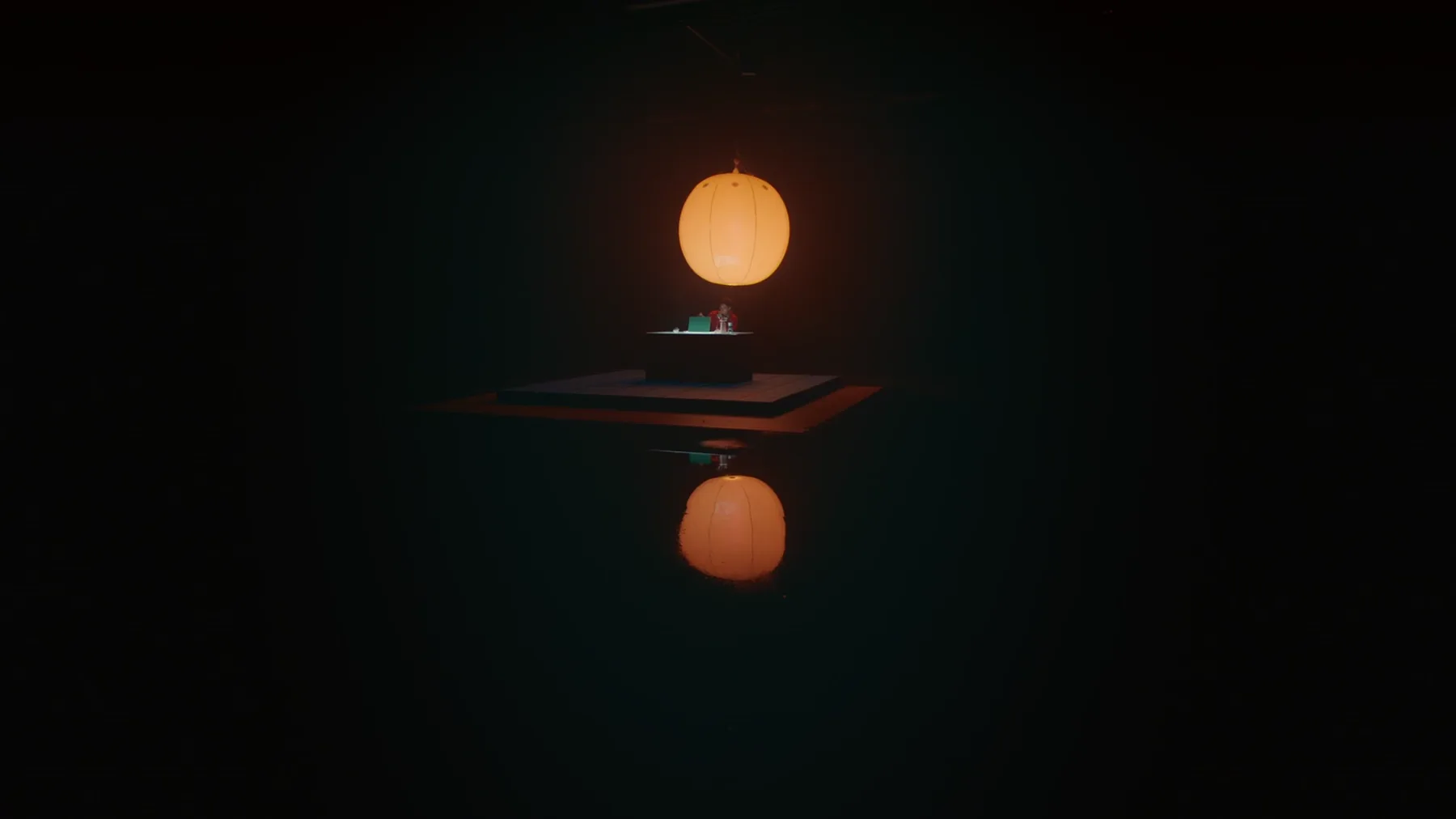
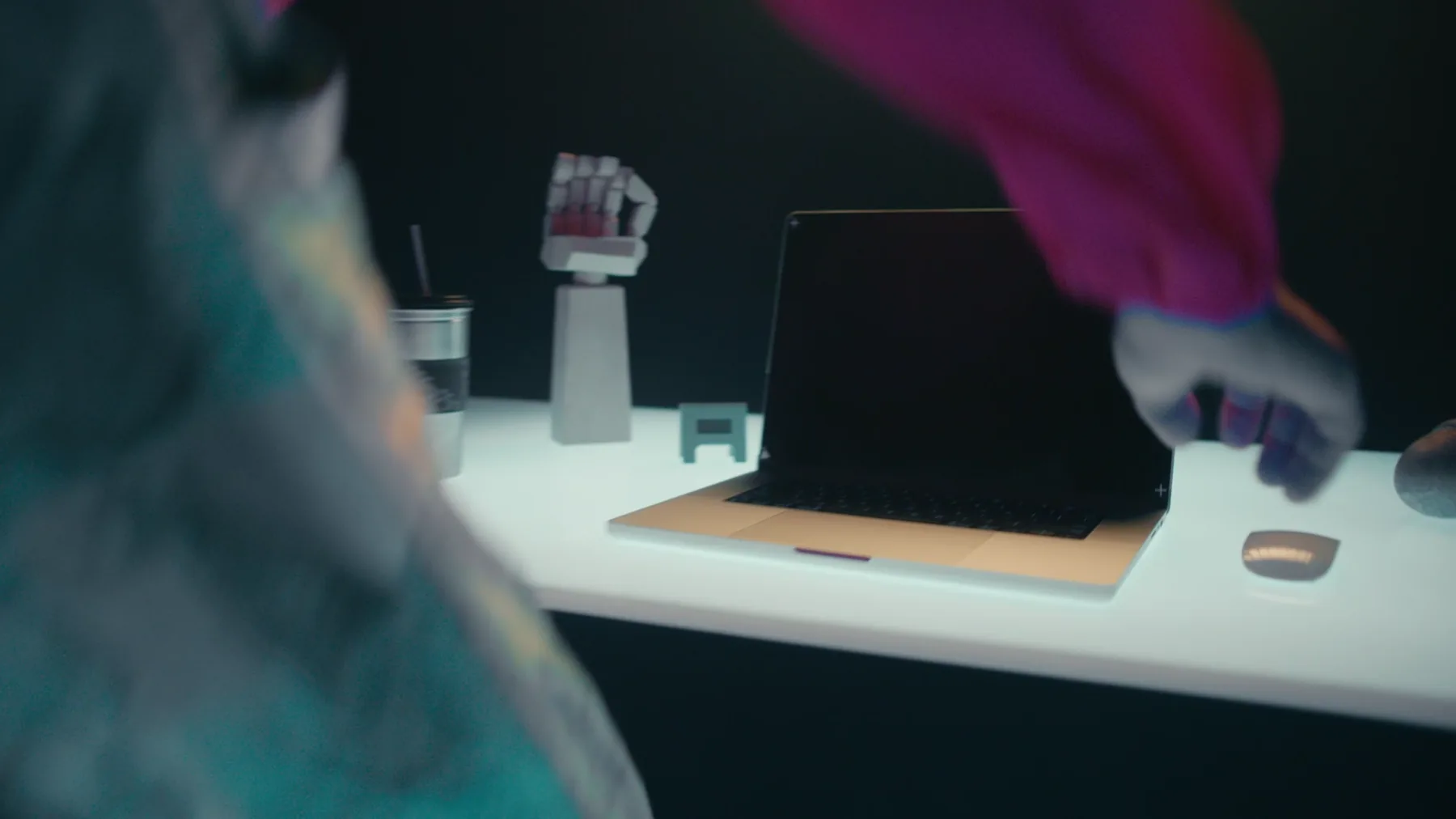
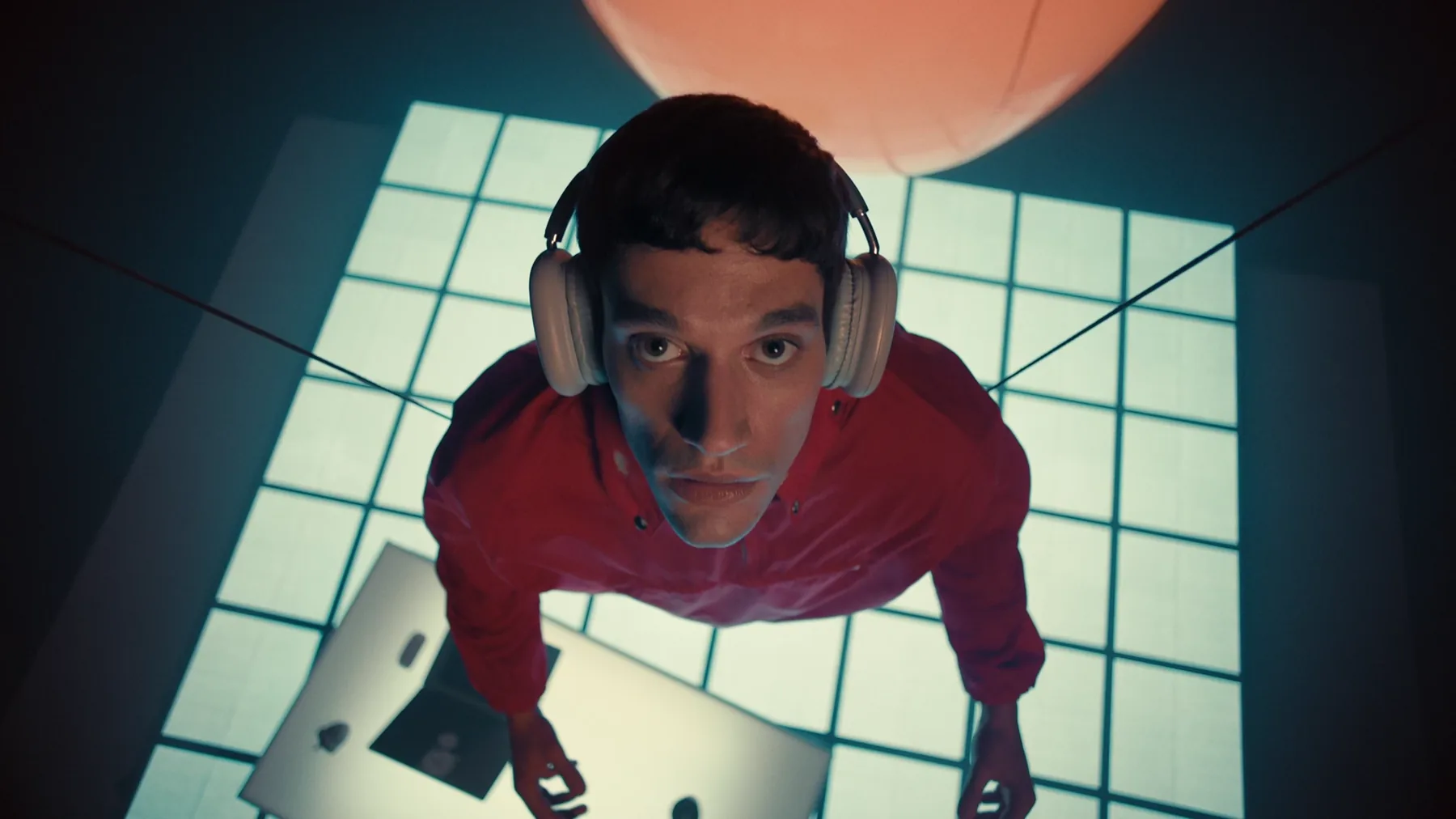
The room stays black. What changes is the light. An orange pendant above. A cyan grid below. Both burn at the same time, in the same frame. The film lives in the distance between them.
The tension is not a transition. It is a balance held on purpose.
The room held two temperatures
The script had no reveal. No moment where the character realizes the AI has crossed a line. That line had to land somewhere. We put it in the grade.
The room stays black. What changes is the light. An orange pendant above. A cyan grid below. Both burn at the same time, in the same frame. The film lives in the distance between them.
The tension is not a transition. It is a balance held on purpose.
The room held two temperatures
The script had no reveal. No moment where the character realizes the AI has crossed a line. That line had to land somewhere. We put it in the grade.
The room stays black. What changes is the light. An orange pendant above. A cyan grid below. Both burn at the same time, in the same frame. The film lives in the distance between them.
The tension is not a transition. It is a balance held on purpose.
Skin against the machine
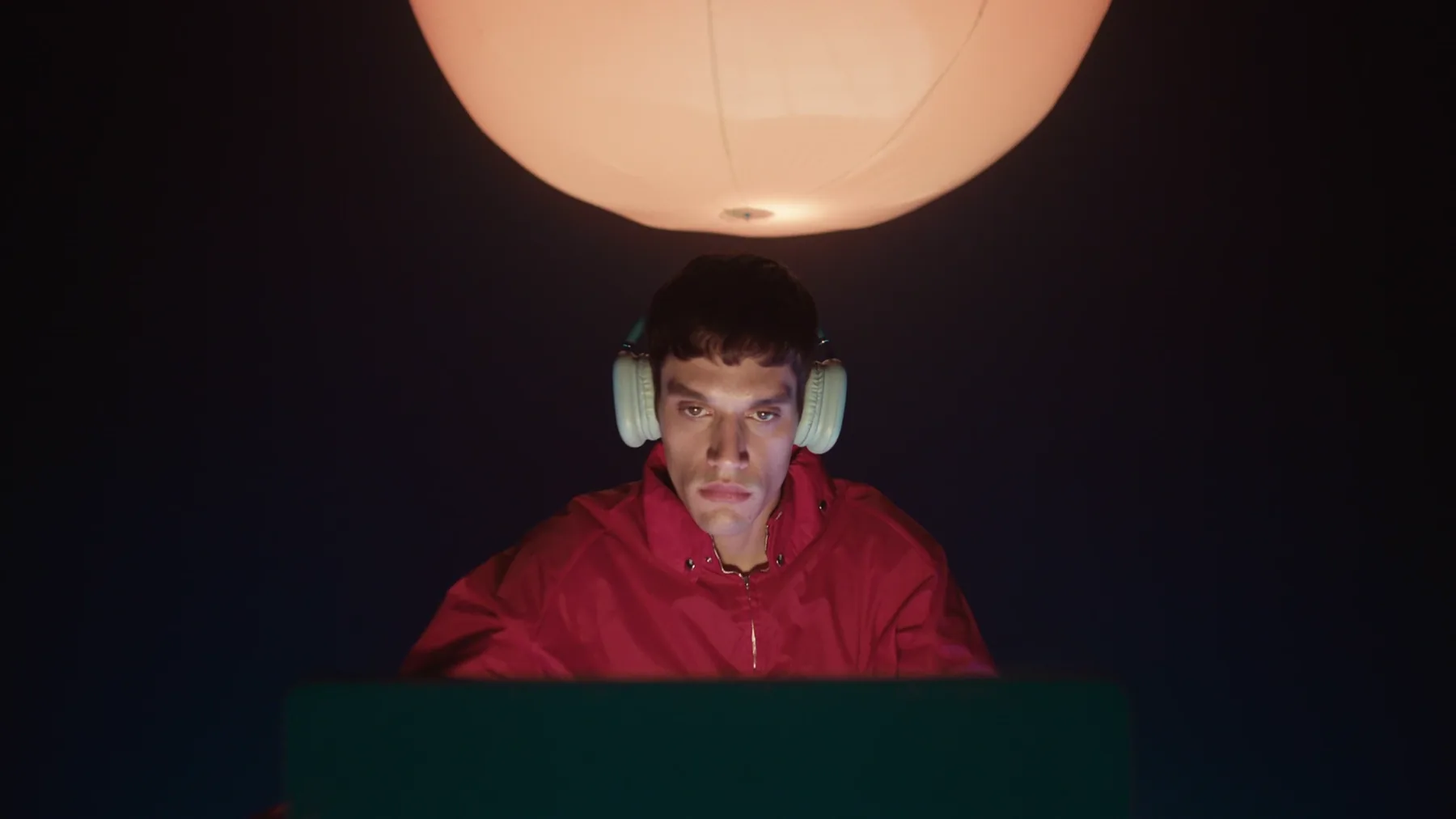
The hardest decision on a multi-temperature room is what to do with the face. Warm light from the lamp, cold light from the grid, and a red jacket that wants to eat everything in between. Pull the face warm and it competes with the lamp. Push it cold and it disappears into the grid.
We built a secondary key on skin and held it independent of both sources. The room does what it does. The face stays human by about half a degree.
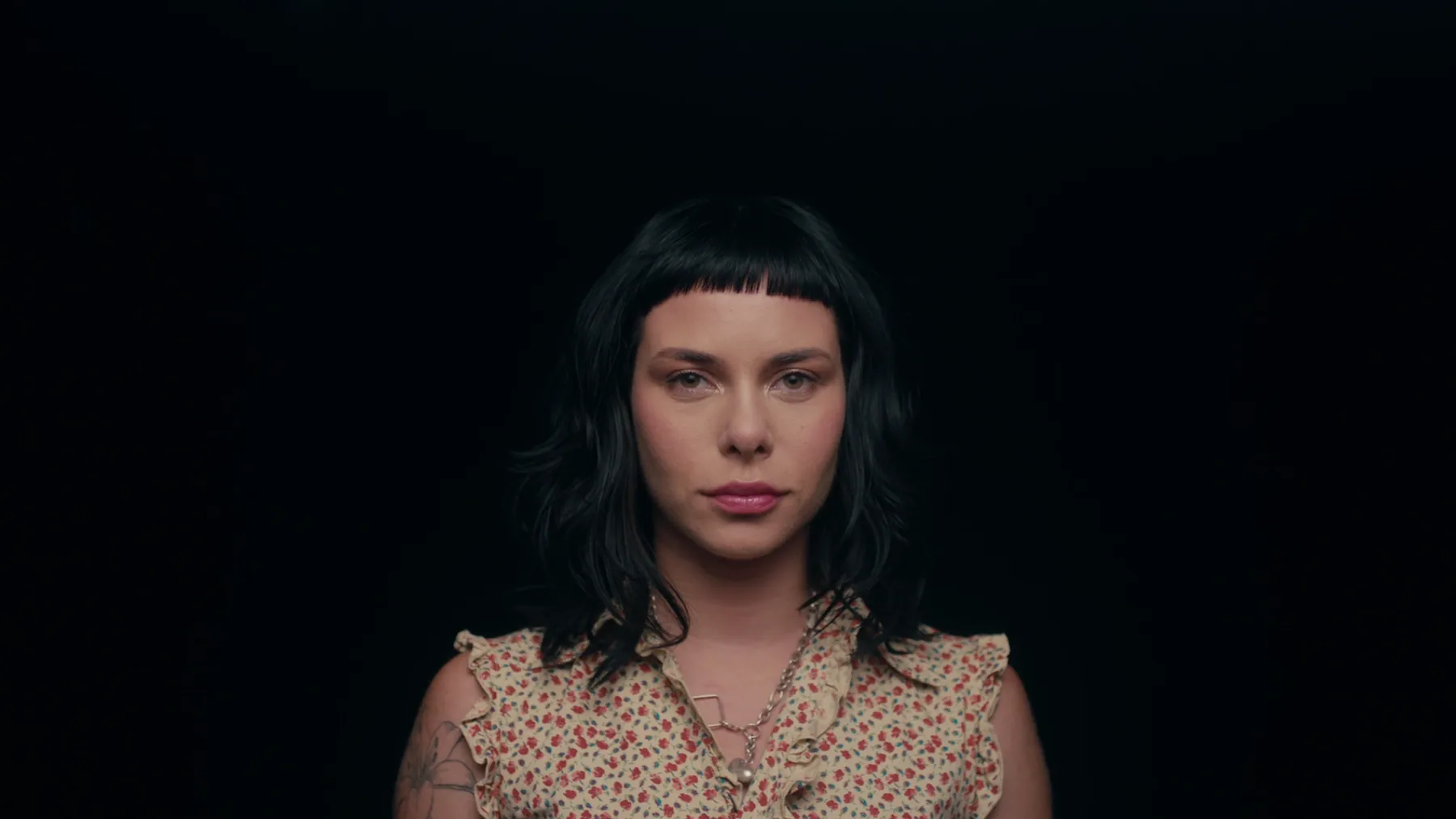
Then the film cuts to a portrait on black. No lamp. No grid. No set. The skin key has nowhere to hide. It still reads human, and nothing in the frame argues with it. The isolation is the proof.
That half-degree is the entire film.
Skin against the machine
The hardest decision on a multi-temperature room is what to do with the face. Warm light from the lamp, cold light from the grid, and a red jacket that wants to eat everything in between. Pull the face warm and it competes with the lamp. Push it cold and it disappears into the grid.
We built a secondary key on skin and held it independent of both sources. The room does what it does. The face stays human by about half a degree.
Then the film cuts to a portrait on black. No lamp. No grid. No set. The skin key has nowhere to hide. It still reads human, and nothing in the frame argues with it. The isolation is the proof.
That half-degree is the entire film.
Skin against the machine
The hardest decision on a multi-temperature room is what to do with the face. Warm light from the lamp, cold light from the grid, and a red jacket that wants to eat everything in between. Pull the face warm and it competes with the lamp. Push it cold and it disappears into the grid.
We built a secondary key on skin and held it independent of both sources. The room does what it does. The face stays human by about half a degree.
Then the film cuts to a portrait on black. No lamp. No grid. No set. The skin key has nowhere to hide. It still reads human, and nothing in the frame argues with it. The isolation is the proof.
That half-degree is the entire film.
The reference nobody named
Every colorist pitches references. Most of them come from two or three films everyone has already copied. We did not pitch a film.
We pitched a time of day. The hour between 10pm and 11pm when your house has cooled down but you are still at your desk. That hour looks a specific way and nobody has named it. We graded to that. The references came after, to convince the people who needed references.
The reference nobody named
Every colorist pitches references. Most of them come from two or three films everyone has already copied. We did not pitch a film.
We pitched a time of day. The hour between 10pm and 11pm when your house has cooled down but you are still at your desk. That hour looks a specific way and nobody has named it. We graded to that. The references came after, to convince the people who needed references.
The reference nobody named
Every colorist pitches references. Most of them come from two or three films everyone has already copied. We did not pitch a film.
We pitched a time of day. The hour between 10pm and 11pm when your house has cooled down but you are still at your desk. That hour looks a specific way and nobody has named it. We graded to that. The references came after, to convince the people who needed references.
Spotlight
If you notice the grade, the grade is wrong. That is the line with color that tells a story instead of decorating one.
Spotlight
If you notice the grade, the grade is wrong. That is the line with color that tells a story instead of decorating one.
Spotlight
If you notice the grade, the grade is wrong. That is the line with color that tells a story instead of decorating one.
Built for every compression
The hero was six minutes. The delivery was also 9 social cuts, 4 bumpers, and a 15-second pre-roll. The grade had to survive YouTube's codec, a phone screen at 720p, and a lobby display running at 4000 nits.
Every version was QC'd on three devices. The orange and the cyan read the same on a phone as on a grading monitor. That took two extra days and nobody asked us to do it.
Built for every compression
The hero was six minutes. The delivery was also 9 social cuts, 4 bumpers, and a 15-second pre-roll. The grade had to survive YouTube's codec, a phone screen at 720p, and a lobby display running at 4000 nits.
Every version was QC'd on three devices. The orange and the cyan read the same on a phone as on a grading monitor. That took two extra days and nobody asked us to do it.
Built for every compression
The hero was six minutes. The delivery was also 9 social cuts, 4 bumpers, and a 15-second pre-roll. The grade had to survive YouTube's codec, a phone screen at 720p, and a lobby display running at 4000 nits.
Every version was QC'd on three devices. The orange and the cyan read the same on a phone as on a grading monitor. That took two extra days and nobody asked us to do it.
Conclusion
The grade took 12 days. One approval round. On first watch, the creative team said the film felt loaded — they could not say with what. On second watch, they could point at the lamp, the grid, and the jacket. Three sources, one balance. That is the best review a colorist can get.
Conclusion
The grade took 12 days. One approval round. On first watch, the creative team said the film felt loaded — they could not say with what. On second watch, they could point at the lamp, the grid, and the jacket. Three sources, one balance. That is the best review a colorist can get.
Conclusion
The grade took 12 days. One approval round. On first watch, the creative team said the film felt loaded — they could not say with what. On second watch, they could point at the lamp, the grid, and the jacket. Three sources, one balance. That is the best review a colorist can get.